
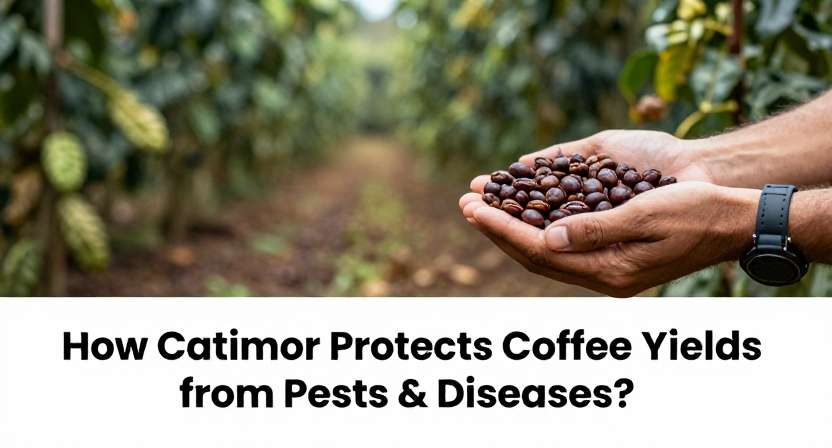
Coffee is getting harder to grow. Rising temperatures, irregular rainfall, and stronger disease pressure are reshaping what farmers can reliably produce—especially with Coffea arabica varieties that were bred for stable, high-elevation conditions. That’s where Catimor coffee stands out: a hybrid designed for resilience, now increasingly important for sustainable coffee production and long-term farm livelihoods.
Catimor is often compared with “traditional” Arabica varieties such as Bourbon, Typica, and pure Caturra because it sits at the crossroads of yield, disease tolerance, and improving cup quality. When grown and processed with care—especially at higher elevations—Catimor can move far beyond its old reputation and deliver bright acidity, clean sweetness, and modern specialty coffee profiles.
What Is Catimor Coffee?
Catimor is a coffee variety group created by crossing the Timor Hybrid with Caturra. The Timor Hybrid is known for carrying disease-resistant traits due to its genetic link to Coffea canephora (Robusta), while Caturra contributes compact plant structure and productivity.
If you want the deeper backstory on how this hybrid was designed and why it matters, see the detailed breakdown of Catimor coffee origin, genetics, and why it was created.
Why Traditional Arabica Struggles Under Climate Change?
Bourbon, Typica, and other legacy Arabica cultivars became famous because they thrive in predictable climates: moderate temperatures, consistent wet and dry seasons, and stable pest pressure. But climate change is disrupting those assumptions.
As heat stress increases and rainfall variability intensifies, farms face:
- Lower flowering consistency (irregular blooms lead to uneven ripening)
- Greater drought stress and reduced cherry development
- Higher pest and pathogen pressure, especially coffee leaf rust (Hemileia vastatrix)
- Rising production costs from fungicides, labor, and replanting
This is why more producers across Latin America, as well as parts of Asia (including Vietnam), have expanded interest in hybrids that can maintain yields even when conditions swing.
Catimor’s Key Advantages for Farmers
Catimor wasn’t bred to be romantic—it was bred to survive. And in a changing agroecosystem, survival often decides whether smallholder farmers can keep producing coffee at all.
- Disease tolerance: Stronger field performance against coffee leaf rust (Hemileia vastatrix), often reducing dependence on fungicide programs.
- Yield stability: Higher productivity potential than many traditional Arabica varieties, especially in challenging years.
- Earlier maturity: Faster time to first meaningful harvest compared with slower-maturing cultivars.
- Climate adaptability: Better performance across a wider range of elevations and weather patterns, especially where heat and rainfall are less predictable.
For a broader view of how farms can pair resilient varieties with better land stewardship, explore sustainable cultivation practices.
Catimor vs Bourbon vs Typica: What’s Actually Different?
Below is a practical comparison of what many producers and roasters evaluate when deciding between Catimor and traditional Arabica cultivars.
| Category | Catimor (Timor Hybrid x Caturra) | Traditional Arabica (Bourbon, Typica, etc.) |
| Leaf rust pressure | Typically more tolerant | Often more vulnerable in outbreaks |
| Yield potential | Often higher | Often moderate |
| Time to productivity | Often faster | Often slower |
| Climate resilience | Stronger under variability | More sensitive to heat and stress |
| Cup potential | High when grown/processed well | Historically strong and consistent |
| Input needs | Can be lower in disease-heavy zones | Can be higher in high-pressure years |
This doesn’t mean Catimor “replaces” Bourbon or Typica. It means farms can diversify risk—especially where long-term climate projections point toward reduced Arabica suitability.
Why Catimor Is Improving?
Catimor used to carry a reputation for earthy or flat cups. That reputation often came from a mix of factors: lower-elevation cultivation, high-yield priorities, and less attention to processing detail.
Today, quality-focused producers are changing that narrative—especially at higher elevations and with careful post-harvest control.
What tends to improve Catimor flavor the most:
- Higher elevation lots with cooler nights (often supporting slower cherry maturation)
- Better picking standards (riper cherry selection)
- Cleaner fermentation management and drying consistency
- Shade-grown systems that reduce heat spikes and water stress
For tasting language and sensory expectations, the most helpful reference point is a clear guide to flavor profile and cupping notes.
Where Catimor Grows Best and Why Altitude Still Matters?
Catimor is adaptable, but it still has “sweet spots.” Many of the most compelling cups come from highland farms where temperature swings, slower ripening, and careful processing give the coffee more aromatic complexity and structure.
Common success factors include:
- Elevations that support good cherry density and acidity retention
- Soils with strong organic matter management
- Agroforestry systems (shade trees and biodiversity) that stabilize microclimates
If you’re mapping origins or sourcing decisions, this overview of growing regions and environmental adaptability helps connect terroir to performance.
How Catimor Supports Resilient Farming?
Catimor’s real sustainability value isn’t just that it can resist disease—it’s that it can reduce the need for reactive inputs when farms are under pressure.
Here’s how it commonly fits into sustainability programs:
- Lower chemical dependency in leaf-rust-prone environments
- Better economic resilience through steadier yields
- Compatibility with shade-grown coffee and biodiversity-forward systems
- Potential support for soil health strategies when paired with composting and mulching
If you want the bigger regional context, this overview of sustainable coffee farming in Latin America complements how Catimor is being used across different origins.
Processing Choices That Help Catimor Shine
The processing method can dramatically shift how Catimor tastes in the cup. Washed process lots often emphasize clarity and acidity; natural process lots can push fruit-forward notes; honey process can build sweetness and body.
- Washed process: cleaner finish, brighter acidity, clearer origin character
- Natural process: heavier fruit notes, more body, higher risk if drying control is weak
- Honey process: balanced sweetness and texture, often very approachable
If you need a simple explainer to match processing style to expected flavor, this guide to coffee processing methods explained: washed vs natural vs honey is a useful companion.
What Does This Mean for Roasters and Home Brewers?
For roasters, Catimor can be positioned as a climate-resilient specialty offering rather than a “compromise coffee.” The best lots often do well as light-to-medium roasts where acidity and aromatics stay expressive.
For home brewers, Catimor tends to reward consistency: good grind control, correct water temperature, and a brew ratio that doesn’t flatten the cup.
- Espresso: look for medium roasts that preserve sweetness without pushing bitterness
- Pour-over: highlight clarity and fruit notes with a balanced extraction
- Immersion brews: emphasize body and caramel sweetness when grind is dialed in
If you’re learning the foundations that make any specialty coffee taste better at home, specialty coffee education is a solid starting point.
And if you want technique-focused guidance for dialing in brews across devices, this overview of coffee brewing techniques can help you make Catimor (and any Arabica) taste its best.
How Consumers Can Support Better Catimor?
Buying Catimor isn’t just about the variety—it’s about supporting farm decisions that prioritize resilience and long-term viability.
What to look for when buying:
- Traceability: named farm/co-op, region, elevation, harvest details
- Processing transparency: washed, natural, honey, or experimental fermentation notes
- Quality signals: tasting notes, roast date, and brewing recommendations
- Sustainability signals: shade-grown systems, soil regeneration practices, or verified sustainability programs
And if you want to connect the variety back to the people growing it, this story on the farmers behind your cup of Catimor adds important context.
Conclusion
Catimor represents a pragmatic evolution in Coffea arabica agriculture: a variety designed to reduce vulnerability to coffee leaf rust, withstand climate volatility, and keep farms productive—without giving up on cup quality.
Traditional cultivars like Bourbon and Typica still define many classic flavor benchmarks, but Catimor is proving it can be more than a “resistant hybrid.” In the right terroir, with the right processing discipline, it can deliver cups that satisfy modern specialty coffee expectations—while helping protect the future of coffee farming.